OEM vs Private Label B2B t-shirts Manufacturing: Which Model Fits Your Brand?
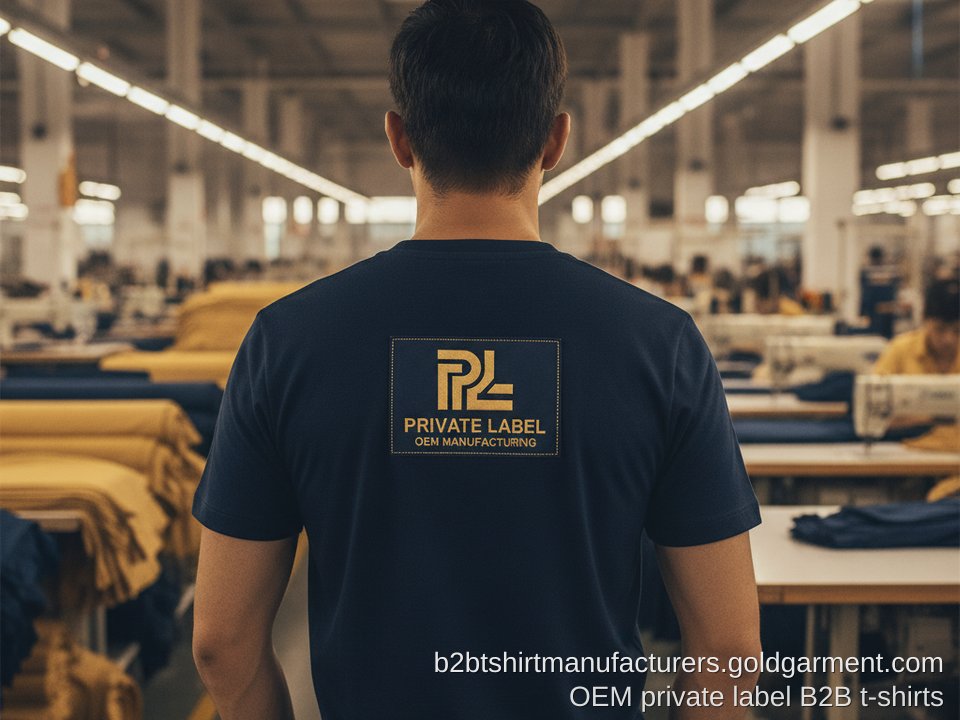
OEM vs Private Label B2B t-shirts Manufacturing: Which Model Fits Your Brand?
When sourcing custom apparel for your brand, understanding the nuances between OEM private label B2B t-shirts manufacturing models is crucial. Both OEM (Original Equipment Manufacturer) and private label offer pathways to bring your branded t-shirts to market, but they cater to different levels of brand control and product development involvement. Navigating these options effectively ensures you partner with the right OEM t-shirt manufacturer to meet your specific business objectives.
Choosing the correct manufacturing model is a strategic decision that impacts your product's uniqueness, cost, and speed to market. Whether you're a startup looking to establish a presence or an established brand expanding your product line, clarity on these terms will empower your sourcing process. This guide will break down the core differences, advantages, and ideal scenarios for each model, helping you make an informed choice for your B2B t-shirt needs.
For a deeper dive into garment manufacturing processes, you might find our OEM vs ODM garment manufacturing guide informative, as it touches upon related production strategies.
Understanding OEM T-shirt Manufacturing
OEM manufacturing, in the context of t-shirts, means you are essentially providing a detailed specification for a product that the manufacturer will produce for you. The manufacturer uses their existing machinery, processes, and often, their material sourcing capabilities to create a t-shirt exactly to your design. You dictate the fabric composition, weight, color, cut, stitching, labels, and any other specific features.
Think of it as commissioning a bespoke suit: you specify every detail, and the tailor brings it to life using their expertise and resources. With OEM, the focus is on replicating your precise vision. The manufacturer's role is to faithfully execute your design, ensuring the final product matches your approved samples and specifications.
This model is ideal for brands that have a very specific product in mind, perhaps a unique blend of fabric, a distinctive fit, or a complex design element that isn't readily available off-the-shelf. It offers a high degree of customization and control over the final product's attributes.
Key Characteristics of OEM Manufacturing:
- Design Ownership: You own the design and specifications.
- Customization: Extensive control over fabric, fit, features, and branding.
- Manufacturer's Role: Execution of your provided design and specifications.
- Material Sourcing: Often relies on your specified materials or the manufacturer sources them based on your requirements.
- Uniqueness: High potential for a truly unique product.
Exploring Private Label T-shirt Manufacturing
Private label t-shirt manufacturing, often referred to as white label B2B t-shirts production, involves taking existing, pre-made t-shirt styles from a manufacturer and branding them as your own. The manufacturer has a catalog of designs and products that are ready for production. Your primary role is to select from these existing options, add your brand's labels, tags, and potentially some minor customization like color variations or print placements.
This model is akin to buying a generic product and then applying your store's brand. The underlying product is already developed and tested by the manufacturer. You leverage their existing infrastructure and product lines to quickly launch your own branded goods.
The advantage of private label is speed and cost-effectiveness. Since the product design and development are already complete, you can often get your branded t-shirts to market much faster and at a lower price point. This is particularly beneficial for brands looking to test the market or scale quickly without significant upfront design investment.
Key Characteristics of Private Label Manufacturing:
- Leveraging Existing Designs: You choose from the manufacturer's ready-made styles.
- Branding Focus: Your main task is applying your brand elements (labels, tags).
- Speed to Market: Faster production cycles due to pre-existing designs.
- Cost Efficiency: Generally more affordable than full OEM due to reduced R&D.
- Limited Customization: Customization is typically limited to branding and minor variations.
OEM vs. Private Label: The Core Differences
The fundamental distinction lies in the level of product development and design input. With OEM private label B2B t-shirts, OEM gives you the reins for design creation, while private label allows you to brand existing products.
OEM requires you to have a clear vision for the product's specifications. You might work with a design team to develop unique patterns, fabric blends, or construction details. The manufacturer then produces this specific design for you. In contrast, private label involves selecting from a manufacturer's existing product catalog. You're essentially buying a finished garment and applying your brand to it.
The choice between these two models hinges on your brand's strategy, resources, and desired level of product differentiation. If you aim for a highly unique product that sets you apart, OEM is likely the path. If speed, cost, and leveraging established designs are paramount, private label might be more suitable.
When to Choose OEM T-shirt Manufacturing
OEM manufacturing is the superior choice for brands that prioritize product originality and a distinct market position. If your brand identity is deeply tied to unique product features, specific material qualities, or a signature fit that is not currently available, OEM allows you to bring that vision to life.
This model is also beneficial for brands that have a clear understanding of their target audience's needs and can articulate precise product requirements. It’s perfect for established brands looking to expand their offerings with proprietary designs or for startups aiming to create a signature product from the outset. You can explore various t-shirt styles guide to inform your OEM design choices.
Furthermore, if you have specific sustainability requirements or ethical sourcing mandates that necessitate precise control over the production process and materials, OEM provides that necessary oversight. As a leading private label tshirts Vietnam provider, we understand the importance of detailed specifications in OEM production.
When to Choose Private Label T-shirt Manufacturing
Private label manufacturing is an excellent strategy for brands that want to enter the market quickly and efficiently. It's ideal for businesses that have a strong brand identity and marketing capability but may not have the resources or desire to invest heavily in product design and development from scratch.
This model is perfect for retailers, promotional companies, or e-commerce businesses looking to offer branded apparel without the complexities of custom product creation. By choosing private label, you can focus your efforts on marketing, sales, and customer engagement, while the manufacturer handles the product sourcing and production. This approach is often a cornerstone of successful B2B t-shirts sourcing for businesses needing branded merchandise.
If you are looking to test new markets or product lines with minimal risk, private label offers a streamlined solution. The reduced lead times and lower initial investment make it an attractive option for scaling your brand's apparel offerings. As demonstrated by Gold Garment trusted manufacturing partner, we offer a wide range of quality base products ready for private labeling.
Factors to Consider When Making Your Choice
Several key factors should influence your decision between OEM and private label t-shirt manufacturing. Your brand's current stage of development, your budget, your timeline, and your desired level of product uniqueness are paramount.
Consider your MOQ 100 pcs requirement. Both models can accommodate this, but the path to achieving it with unique OEM designs might involve more development time and cost compared to selecting from a private label catalog. Assess your internal design capabilities and your team's expertise in product specification. If you have a strong design team, OEM might be more appealing.
Your budget will also play a significant role. OEM generally involves higher upfront costs due to custom design and development, while private label is typically more cost-effective for initial orders. Understanding the factory-direct pricing benefits from a reputable manufacturer like Gold Garment is crucial for both models.
Finally, think about your long-term brand vision. Do you aspire to create a product that is entirely your own and potentially patentable, or are you focused on building brand recognition through consistent, quality branded merchandise? Your answer will guide you towards the most suitable manufacturing approach. For a comprehensive understanding of the journey your garments take, explore How B2B t-shirts Are Made: The Complete Manufacturing Process Step-by-Step.
OEM vs. Private Label: A Quick Comparison
- Product Uniqueness: OEM offers higher uniqueness; Private Label uses existing designs.
- Time to Market: Private Label is generally faster; OEM requires design and development time.
- Cost: OEM typically has higher upfront costs; Private Label is more cost-effective for initial runs.
- Design Control: OEM provides full design control; Private Label offers limited design input.
- Brand Differentiation: OEM allows for a highly differentiated product; Private Label relies on branding and marketing for differentiation.
Frequently Asked Questions
Q: Can I combine OEM and private label elements?
A: While the core concepts are distinct, some manufacturers offer hybrid approaches. You might start with a private label base garment and then add custom design elements or finishes through an OEM process. This can offer a balance between speed, cost, and customization.
Q: What is the minimum order quantity (MOQ) for OEM vs. Private Label?
A: For B2B t-shirt manufacturing, a common starting MOQ is 100 pieces per style and color. This generally applies to both OEM and private label. However, for highly specialized OEM designs with unique materials, some manufacturers might have higher MOQs to justify the production setup.
Q: How do I ensure quality with either model?
A: Regardless of the model, rigorous quality control is essential. For OEM, provide detailed specifications and approve pre-production samples meticulously. For private label, request samples of the manufacturer's existing products to assess their quality standards. Working with an experienced manufacturer like Gold Garment, based in Ho Chi Minh City, Vietnam, ensures consistent quality through established processes and a commitment to excellence.
Q: Which model is better for a new brand launching a t-shirt line?
A: For a new brand, private label often presents a lower-risk, faster entry point. It allows you to test the market with branded apparel without significant upfront investment in product design. Once established, you can explore OEM for more unique product lines.
Choosing between OEM and private label t-shirt manufacturing is a strategic decision that defines your product's journey from concept to customer.
We are here to help you navigate these options and ensure your B2B t-shirts meet your brand's exact needs, offering factory-direct pricing and worldwide shipping from our facilities in Vietnam.
📩 Request a Free Quote — Response Within 5 Minutes
🌎 Website: b2btshirtmanufacturers.goldgarment.com
Factory-direct pricing · MOQ from 100 pcs/style · Sample development · Worldwide shipping
.jpg)
.jpg)
.jpg)
Nhận xét
Đăng nhận xét